
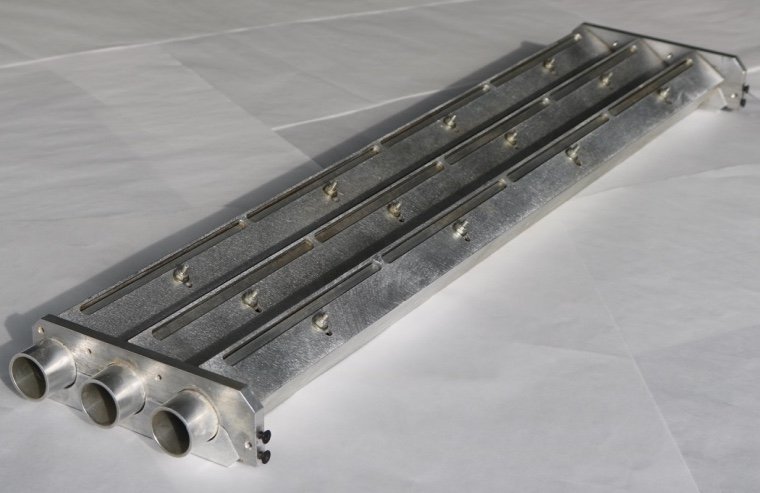
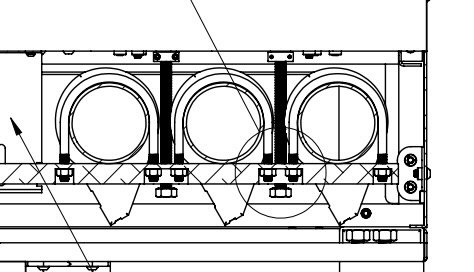

HAK3 Heated Air Impingement Web Dryer
Heated air impingement drying engineered around airflow, temperature, web geometry, and production speed.
Prime’s HAK3 dryer uses high-velocity heated air to support drying in web-fed and industrial applications. Air-knife geometry, exit velocity, heating capacity, temperature range, VFD criteria, and operating controls are selected around the specific process rather than treated as a fixed dryer configuration.

Get in Touch with a Product and Application Specialist
Heated Air Impingement for Web Production
Drying performance depends on how heat and airflow interact with the chemistry, substrate, and line speed.
HAK3 combines convection drying with high-velocity air impingement to move heated air directly across the material surface.
Prime configures the system around variables including:
web width
substrate
chemistry
production speed
air-exit velocity
required heating capacity
target temperature range
machine geometry
controls requirements
This gives the application team more control over drying conditions than a one-size-fits-all hot-air system.
Key Outcomes
Configure heated-air delivery around the actual production line.
Match air-knife length, diameter, and shape to the process.
Set air-exit velocity around the drying requirement.
Size heater capacity around chemistry and line speed.
Define minimum and maximum operating temperatures.
Integrate VFD criteria into the airflow strategy.
Coordinate dryer operation through Prime Premier controls.
Application-Engineered Air Delivery
Design the Dryer Around the Process
Prime’s technical team evaluates the drying application before specifying the HAK3 system.
Key design variables include:
HAK length
HAK diameter
HAK shape
air-exit velocity range
heating kW
VFD requirements
minimum and maximum temperature range
Prime Premier dryer-system operating parameters
The air-knife geometry is selected to deliver heated airflow appropriate to the application.
High-Velocity Air Impingement
Move Heated Air Directly Across the Material Surface
HAK3 uses high-velocity air impingement to increase heat and mass transfer at the substrate surface.
The goal is to move heated air where the drying process needs it rather than relying only on ambient convection.
For water-based and other compatible chemistries, this can support moisture removal and help keep the drying process aligned with production speed.
Configure Air Velocity Around the Application
Match Airflow to Chemistry, Substrate, and Speed
Air-exit velocity is one of the variables Prime specifies during system design.
That allows the dryer to be engineered around differences in:
coating or ink chemistry
substrate
line speed
product width
drying load
Heating Capacity Sized to the Process
Specify the Required Heating Load
The HAK3 system is configured with heating capacity based on the needs of the drying application.
Temperature Range Defined Around Production
Control the Operating Window
Minimum and maximum temperature requirements are established as part of the HAK3 system design.
Controls Designed Around the Dryer
Integrate Dryer Operation With the Production Line
Prime Premier controls can be configured around the HAK3 system’s operating requirements.
The controls strategy can incorporate:
airflow settings
temperature parameters
VFD operation
system status
dryer operating conditions
Where HAK3 Fits
Applications
-
Heated-air drying for compatible web-fed printing processes where airflow and temperature must be configured around line speed and chemistry.
-
Application-engineered air impingement for flexographic lines using compatible water-based or other dryable chemistries.
-
Heated-air drying for digital workflows where moisture removal and process temperature need to be controlled inline.
-
Can be incorporated into sheetfed drying systems where heated-air impingement is part of the drying strategy.
-
Drying for packaging applications where substrate, chemistry, and production speed determine the airflow and heat requirement.
-
Integration into converting equipment where the dryer must be configured around the web path and production process.
-
Applicable to compatible print workflows where controlled drying is required inline.
-
Can be configured for industrial coating and production applications requiring heated-air impingement.
Technical Design Parameters
| Design Parameter | HAK3 |
|---|---|
| Drying Technology | Heated air impingement + convection |
| HAK Length | Application-specific |
| HAK Diameter | Application-specific |
| HAK Shape | Application-specific |
| Air Exit Velocity | Application-specific range |
| Heating Capacity | Sized by required kW |
| Airflow Control | VFD criteria specified per system |
| Temperature Range | Minimum / maximum defined per application |
| Controls | Prime Premier operating parameters |
| Applications | Sheetfed, web, digital, flexographic, packaging, converting, industrial |
Support Beyond Installation
Support for the Life of the Drying System
Prime’s involvement continues after installation and startup.
Customers have access to technical support, controls expertise, OEM replacement components, and service assistance throughout the operating life of the system.
As production requirements change, Prime can also evaluate adjustments to controls, airflow, heating, or other system components where practical.
Talk Through Your Application
Is HAK3 the Right Drying Configuration for Your Line?
Chemistry, substrate, web width, air velocity, drying temperature, production speed, and machine geometry all affect dryer design.
Talk with a Prime application specialist about the process and determine the HAK geometry, heating load, airflow, and controls strategy required for the application
Related Products
For applications that benefit from combining heated-air impingement with infrared energy.
For digital-printing and primer/OPV applications where IR and heated-air drying work together.
For sheetfed press applications requiring a dedicated hybrid delivery-section solution.